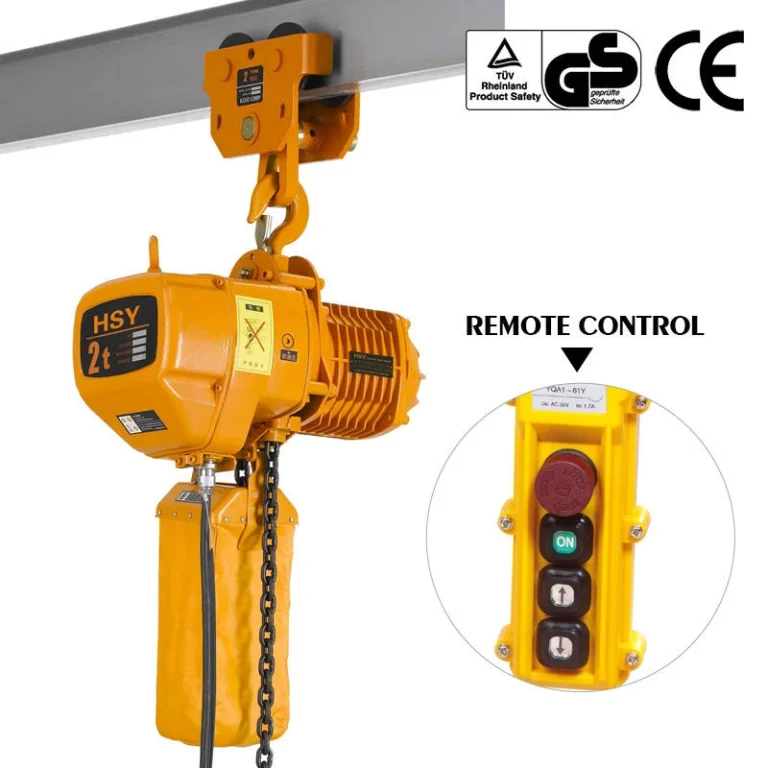
Electric chain hoists provide powerful, motorized lifting for frequent and heavy-duty applications. These units significantly reduce operator effort and increase productivity in manufacturing, assembly lines, and warehouses. Key features include variable speed control, integrated safety brakes, and reliable performance for demanding cycles.
The Role of Electric Chain Hoists in Modern Industry
Electric chain hoists represent a significant evolution from manual models, utilizing an electric motor to drive the lifting mechanism. They are designed for applications requiring frequent, repetitive, or heavy lifting where operator fatigue and speed are primary concerns. Their adoption directly correlates with improved workflow efficiency and reduced physical strain on personnel.
Operational Mechanism and Design Features
An electric motor, powered by a standard industrial voltage supply, drives a set of reduction gears. This gear system turns the load drum or sprocket, which moves the high-tensile alloy chain. Modern units feature electromagnetic disc brakes that engage automatically when power is cut, holding the load securely. Many models offer variable lifting and lowering speeds for precise load handling.
Typical Industrial Environments and Benefits
You will find these hoists extensively used in production facilities for handling raw materials and finished products, on assembly lines for positioning components, and in distribution centers for loading and unloading. The primary benefits are consistent speed, the ability to handle higher capacities with less effort, and the potential for integration into more automated systems via pendant controls or radio remote.
Important Operational and Maintenance Factors
Proper installation on a suitable beam or trolley is critical for safety and performance. Operators must be trained on control functions, especially precision spotting. Regular maintenance, as per the manufacturer’s schedule, is essential. This includes checking electrical connections, verifying brake function, lubricating gears as specified, and inspecting the load chain for wear, stretching, or damage to ensure long-term reliability.
Need More Information On The Types Of Cranes? Contact MAITOR Today!
If you’re in need of an crane for your project but not sure which type or types of cranes will work best for your needs, we can help!
To learn more about our business and our equipment keep reading the helpful articles on our blog page.
To start a partnership with our team here at MAITOR, call us today toget a quote!